Choosing the 2026 Best 30m Depth Rock Drill requires more than comparing drilling depth.
A machine may reach 30 metres on paper, yet struggle in fractured granite, wet clay, or loose overburden. Global buyers should examine torque, feed force, rod diameter, compressor capacity, and recovery speed. These details affect every hole, every shift, and every maintenance decision.
Dr. Evert Hoek, a respected rock-engineering authority, stated, “The objective of rock mechanics is to provide a sound basis for the design of structures in rock.” His principle also guides drill selection. The best 30m Depth Rock Drill must match the ground, not merely the brochure.
Look closely at field performance. A compact rig may work well beside narrow roads, while a heavier crawler offers better stability on uneven benches. Automatic rod handling can reduce fatigue, but it may increase repair costs. Water injection improves dust control, although it demands reliable pumps and drainage planning.
Service access matters greatly.
Buyers should verify local parts availability, operator training, warranty terms, and manufacturer support. Certifications and safety documentation also deserve careful review across different markets. Fuel use and consumables can change the real purchase cost after several months.
No ranking is perfect. Rock conditions vary, and some published specifications remain optimistic. This guide therefore compares practical capability, not just maximum depth. It considers productivity, durability, transport, operating cost, and buyer risk. The final choice should come from tested evidence, site geology, and honest after-sales commitments.
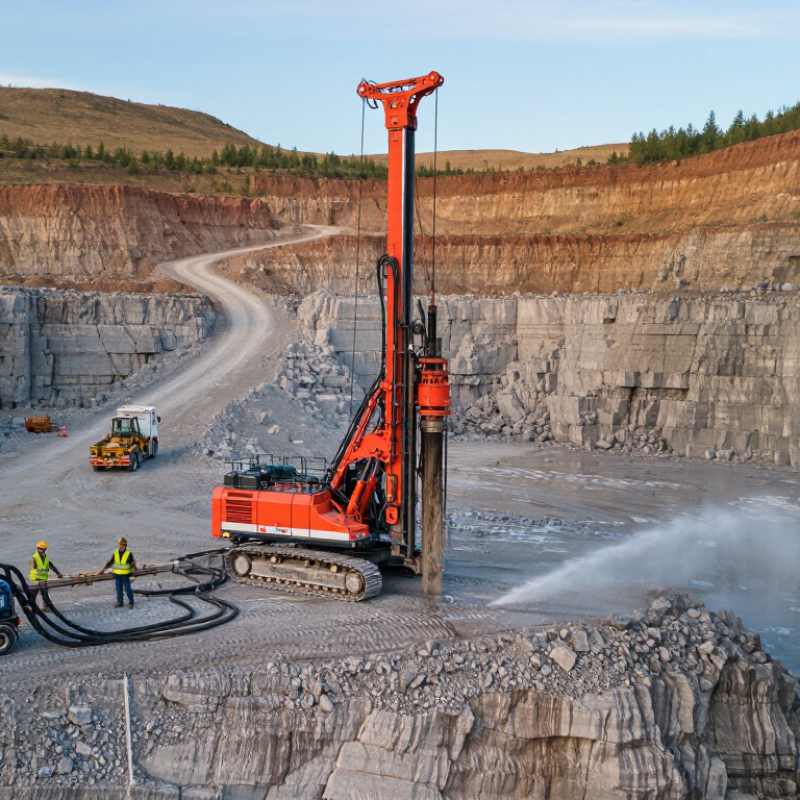
2026 Best 30m Depth Rock Drill for Global Buyers?
A 30 m drilling requirement needs more than a depth rating. Define the hole diameter first. A 90 mm hole may suit sampling, while a 150 mm hole may support blasting or anchoring. Larger holes demand stronger rods, higher torque, and more air volume. Do not guess.
Rock strength changes the machine choice sharply. Soft limestone often drills smoothly, but granite can slow penetration and increase bit wear. Review compressive strength, fractures, abrasiveness, and water conditions before purchasing. In field work, I have seen a drill rated for 30 m struggle at 22 m in fractured rock. The specification was accurate, but the ground assumption was not.
Daily output should be measured in completed holes, not drilling minutes. Include positioning, rod changes, flushing, compressor recovery, and routine maintenance. For example, eight 30 m holes may require a full shift when the rock is hard and access is uneven. A practical estimate uses penetration speed, setup time, and expected downtime. Leave a margin for weather and broken ground. It is easy to promise too much. Ask suppliers for test data using similar rock and diameter. Confirm torque, feed force, air pressure, fuel use, dust control, and operator access. A reliable selection balances depth, hole size, rock conditions, and achievable daily production.
Define the drilling requirement by hole diameter, rock strength, and expected daily output. The chart shows practical planning ranges for completing 30 m deep holes during an 8-hour shift.
Indicative planning values: production decreases as unconfined compressive strength increases, while larger hole diameters generally require more drilling energy and time. Actual results depend on rock abrasiveness, jointing, water conditions, drill-bit type, operator efficiency, and site access.
A 30m hole is not automatically a DTH job. The correct choice depends on rock strength, fracture zones, hole diameter, and available air volume. DTH places the hammer directly behind the bit, keeping impact energy near the cutting face. This usually supports straighter holes in hard, broken ground. Top-hammer drilling transfers energy through the rod string, so joint wear and energy loss become more noticeable as depth increases.
For 17–24 bar systems, top-hammer equipment can suit shallow, medium-hard formations and mobile quarry work. At 25–35 bar, DTH becomes more attractive for deep production holes and difficult rock. Pressure alone is misleading. A compressor delivering 30 bar may still fail if its flow drops under continuous demand. The U.S. Department of Energy reports that compressed-air leaks can waste 20–30% of system output. Compressed Air Challenge guidance recommends reducing leakage toward 5–10% in well-managed systems.
Check the details.
Field testing should record penetration rate, fuel use, rod temperature, flushing quality, and hole deviation. A 30m DTH hole may drill faster, yet consume more air and require stronger compressors. Top hammer may cost less initially, but worn couplings can quietly reduce productivity. My practical concern is simple: buyers often compare rated pressure, not delivered air at the drill. That mistake can distort the entire selection.
Sources: U.S. Department of Energy, Improving Compressed Air System Performance, 3rd Edition; Compressed Air Challenge, Best Practices for Compressed Air Systems.
2026 Best 30m Depth Rock Drill for Global Buyers?
For a 30m hole, penetration rate must be measured in actual rock, not soft test ground. Unconfined compressive strength, fractures, moisture, and bit diameter can change results sharply. A practical target may range from 0.8 to 2.5 metres per minute in competent rock, but this is only a field benchmark. Record metres drilled per operating hour, including rod changes and cleaning delays. The U.S. Geological Survey’s Mineral Commodity Summaries 2025 reinforces how strongly geology affects mining productivity. Marketing figures rarely show this variation.
Fuel use needs a duty-cycle test. The U.S. Environmental Protection Agency’s NONROAD model separates rated power from load factor, showing why idle time can distort litres-per-hour comparisons. Track fuel per metre, not fuel per hour. Rod life also deserves attention. Excessive torque, poor alignment, and abrasive quartz can damage threads before reaching 30m. Compressor capacity is often underestimated. The U.S. Department of Energy reports that compressed-air systems may lose 20–30% of energy through leaks and pressure losses. Select sufficient free-air delivery at working pressure, then verify it under drilling load. Do not guess.
Tips: Measure the rock. Use a calibrated flow meter and fuel log. Keep 10–15% compressor reserve where conditions vary. Inspect rod threads daily, and compare penetration, fuel, and rod cost per completed metre. My own concern is simple: a faster drill can become expensive when compressor demand, maintenance delays, and short rod life are ignored.
Choosing a 30m-depth rock drill in 2026 requires more than checking drilling reach and impact power. Safety verification should begin with ISO 12100, which supports systematic hazard identification and risk reduction. Inspect rotating parts, feed systems, hydraulic lines, emergency stops, and access platforms. Ask for the machine’s risk assessment and technical file, not only a declaration.
Watch the details.
During a site inspection, guards should remain secure while the drill operates under vibration. Emergency controls must be reachable from the operator’s normal position. Noise, dust, falling rock, and unexpected hose movement also require documented controls. ISO 12100 guides the process, but local workplace rules may demand additional testing, training, or protective equipment.
Engine emissions need regional confirmation before purchase. Requirements can differ between the European Union, North America, and other markets. Depending on location, buyers may need evidence for Stage V, EPA Tier 4 Final, or comparable non-road engine rules. Request engine certificates, test reports, maintenance records, and fuel specifications. Confirm whether the documentation matches the exact engine and production year. A copied certificate can create delays at customs or on site.
Real inspections are rarely perfect. A supplier may provide strong safety documents but weak dust-control evidence. Ask for corrections in writing. Check labels, serial numbers, guarding, and exhaust components against the submitted records. A short field trial, witnessed by a qualified technician, can reveal vibration, heat, or alarm problems hidden in brochures.
2026 Best 30m Depth Rock Drill for Global Buyers?
For a 30-meter drilling job, purchase price rarely shows the real cost. Tool life should be measured in drilled meters, not calendar months. A bit that reaches 1,200 meters before replacement may outperform a cheaper bit lasting 500 meters. Track penetration rate, fuel use, downtime, and replacement labor during site trials. Keep the records honest.
Maintenance affects every drilling shift. Check rod threads, flushing lines, compressor pressure, and hydraulic leaks daily. Small leaks can reduce drilling speed and increase fuel consumption. A practical maintenance plan should include spare seals, filters, and wear parts near the worksite.
Remote sites often lose several days waiting for simple components. That delay is expensive.
Payback depends on production, not promises. Compare the machine’s full cost against usable meters drilled per month. Include operator training, transport, customs processing, financing, and scheduled service. Global support also needs proof. Ask for response times, technical documents, multilingual assistance, and local service coverage. I have seen buyers focus heavily on drilling depth, then underestimate ground changes and abrasive rock. That judgment can fail. A strong evaluation uses test holes, independent maintenance records, and realistic rock samples. Some estimates will still be imperfect. Leave room for weather, geology, and operator learning.