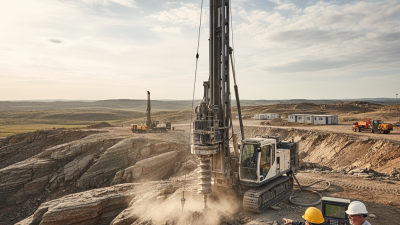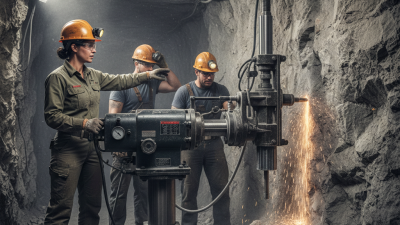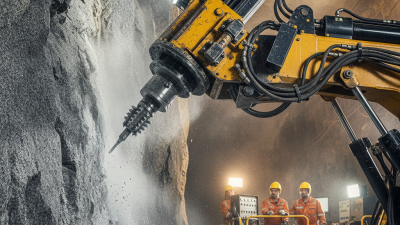
Choosing the right Hydraulic Drill Rig supplier in 2026 requires more than comparing prices. Global buyers need dependable equipment, verified performance, and practical support after delivery.
This guide examines leading suppliers through field experience, engineering capability, manufacturing quality, and customer service. It considers rigs used for quarrying, foundation work, mining, water wells, and construction projects. Important details include drilling depth, rotary torque, power source, feed system, operating weight, and compatibility with different rock conditions. A machine working on hard granite may need stronger torque and a larger compressor than one used in softer soil.
Real performance matters.
Reliable suppliers should provide test data, clear specifications, operator training, spare parts, and responsive technical support. Buyers should also review warranty terms, maintenance schedules, inspection procedures, and delivery capacity. Certifications can support confidence, but they do not replace factory audits or conversations with experienced users.
No supplier is perfect.
Some companies offer advanced automation but limited regional service. Others provide robust machines but weaker documentation. This comparison recognizes those trade-offs instead of presenting a simple ranking. It also encourages buyers to assess local working conditions, import requirements, financing terms, and long-term operating costs. A lower purchase price may become expensive when filters, hydraulic hoses, or replacement tooling are difficult to obtain.
The 2026 market is changing quickly. Battery-assisted systems, remote monitoring, emission controls, and improved operator safety are gaining attention. However, proven reliability remains essential. The strongest supplier is not always the largest one, but the partner that supports safe, efficient, and measurable drilling results.
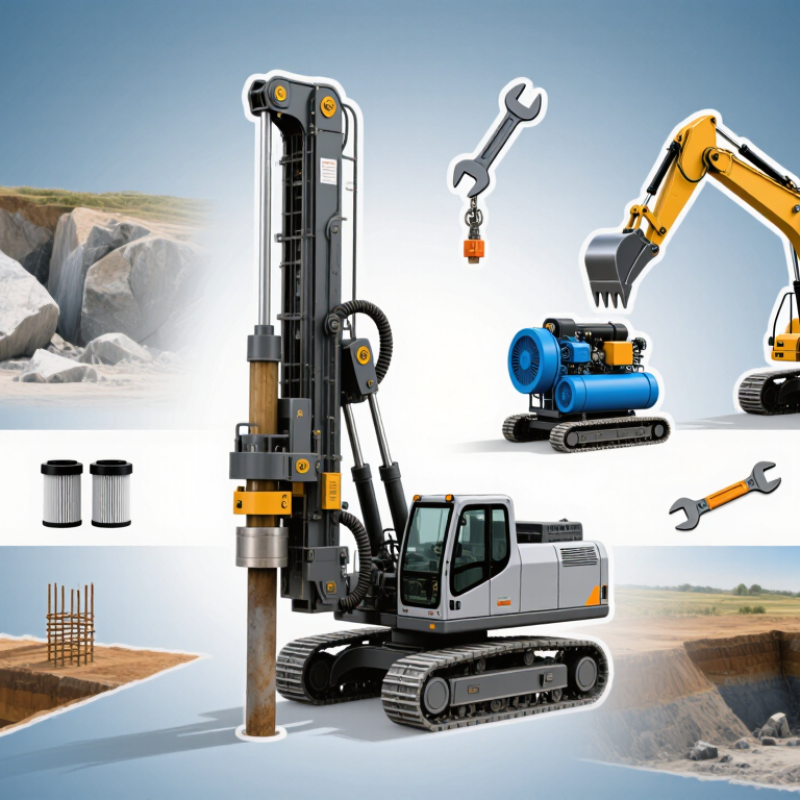
A hydraulic drill rig is a mechanized system that uses pressurized fluid to create drilling force. Its hydraulic circuit powers rotation, feed movement, and auxiliary operations. Compared with purely mechanical systems, it offers precise control under changing ground conditions. Operators can adjust torque, speed, and feed pressure from the control station. This matters when rock layers shift within a few meters. Field experience shows that stable pressure readings often reveal problems before visible damage appears. Small leaks should never be treated as harmless.
Hydraulic drill rigs serve mining, construction, geotechnical investigation, water-well development, and foundation work. In mining, they drill blast holes with consistent spacing and depth. Construction crews use them for anchors, piles, and slope stabilization. Geotechnical teams collect core samples to assess soil and rock strength. Water-well projects require suitable depth capacity, mud systems, and corrosion-resistant components. The machine must match the site, not merely the project label. A compact rig may work beside buildings but struggle in hard rock. A larger model can provide power, yet transport and ground access become difficult.
Global buyers should examine drilling diameter, maximum depth, hydraulic efficiency, maintenance access, spare-part availability, and operator training. Supplier documentation should include test records, safety instructions, and service responsibilities. Specifications can look impressive on paper. Actual performance depends on tooling, geology, climate, and maintenance discipline. Buyers should request field references and inspect critical components before purchase. Even experienced teams sometimes underestimate noise, vibration, and fuel costs. That oversight deserves careful review.
2026 Top Hydraulic Drill Rig Suppliers for Global Buyers
Key Criteria for Evaluating Global Hydraulic Drill Rig Suppliers
Selecting a hydraulic drill rig supplier requires more than comparing catalog prices. Field experience shows that drilling conditions often expose weaknesses hidden in brochures. Ask for performance data from rock, soil, temperature, and altitude conditions similar to your project.
Examine the rig’s drilling depth, torque, feed force, hydraulic efficiency, and service access. Request test records, maintenance schedules, and clear component specifications. A reliable supplier should explain how the machine performs during long shifts, not only during demonstrations. Check whether operators can reach filters, valves, and lubrication points without unsafe procedures. Small access problems can create costly downtime.
Supplier capability matters as much as machine design. Review production history, quality-control procedures, operator training, spare-parts availability, and response times. Confirm that manuals are accurate and written in a language your maintenance team understands. Independent inspections and references from comparable projects can strengthen confidence. Still, no evaluation is flawless. A polished factory visit may not reflect field support after delivery. Ask difficult questions about failed components, warranty limits, delivery delays, and technical responsibility. Some suppliers may provide excellent equipment but weak local support. Others may communicate well but lack consistent manufacturing control. This balance deserves careful, documented review.
Key procurement factors for global buyers assessing hydraulic drill rig suppliers
The weighting model prioritizes drilling performance and equipment reliability, followed by lifecycle cost, safety compliance, after-sales support, and delivery capability. Buyers should adjust these weights according to geology, operating environment, project scale, and local regulations.
In 2026, international buyers need hydraulic drill rig suppliers with proven field capability, not attractive brochures alone. A reliable supplier should explain drilling depth, torque, feed force, and suitable rock conditions clearly. These details help buyers match equipment with mines, foundations, water wells, or geothermal projects. Practical suppliers also provide inspection records, operator training, spare parts, and responsive technical support.
Tips: Ask for recent project references and service response times. Check whether components meet your destination’s safety and emissions requirements. Request a complete quotation, including packaging, delivery, commissioning, and replacement parts. A low initial price may hide expensive downtime later.
Experienced buyers should examine frame strength, hydraulic stability, dust-control options, and maintenance access. Photos of the control panel are useful, but live testing reveals more. Suppliers serving overseas customers should communicate clearly across time zones and provide manuals in understandable language. Warranty terms deserve careful reading, especially for pumps, valves, and drilling tools. Some specifications may appear impressive yet perform poorly in fractured rock. That possibility deserves honest discussion. Compare measured performance, not promises. Reliability is often decided by small details, such as filter access, hose protection, and local technician availability.
Global buyer reference table for comparing anonymous hydraulic drill-rig supplier categories and equipment capabilities
| Supplier Category | Typical Rig Configuration | Common Drilling Method | Typical Hole Diameter | Typical Drilling Depth | Typical Installed Power | Primary Applications | International-Buyer Requirements | Key Evaluation Metrics |
|---|---|---|---|---|---|---|---|---|
| Surface DTH Rig Suppliers | Tracked crawler rig with hydraulic feed, rotary head and onboard or external air-compressor package | Down-the-hole hammer | 90–300 mm | 30–60 m per hole | 150–350 kW | Quarrying, open-pit blasting, mining and large-diameter water-well drilling | Compressor compatibility, transport dimensions, dust-control package, cold-weather options and local service support | Penetration rate, fuel consumption, rod-changing system, ground clearance and spare-parts availability |
| Top-Hammer Crawler Rig Suppliers | Compact or mid-size crawler platform with hydraulic rock drill and automatic rod handling | Top-hammer percussion with rotary flushing | 45–178 mm | 20–40 m per hole | 100–250 kW | Construction blasting, quarry benches, road cutting, trenching and foundation work | Machine width, climbing ability, export packing, operator training and regional technical support | Drill accuracy, boom coverage, noise and dust control, hydraulic efficiency and ease of maintenance |
| Rotary Blasthole Rig Suppliers | Heavy crawler or rotary platform with mast, high-torque rotary head and large air system | Rotary air or rotary tricone drilling | 152–311 mm | 30–60 m per hole | 300–750 kW | Large open-pit mines, aggregate quarries and production blasting | High-altitude package, emissions compliance, haul-road mobility, remote monitoring and mine-site safety documentation | Availability, drilling cost per metre, mast stability, dust collection and total cost of ownership |
| Water-Well and Geothermal Rig Suppliers | Truck-mounted, trailer-mounted or crawler hydraulic rig with rotary head and mud or air circulation | Rotary, DTH, mud rotary or dual-rotary drilling | 152–445 mm | 300–1,500 m, application dependent | 200–500 kW | Water wells, geothermal boreholes, mineral exploration and environmental drilling | Mud-pump capacity, casing-handling equipment, road-registration requirements, water-management system and commissioning support | Pullback capacity, torque, pump output, casing diameter, mast load rating and serviceability |
| Foundation and Anchoring Rig Suppliers | Compact crawler or articulated rig with multi-angle boom and hydraulic rotary-percussion head | Rotary, rotary-percussive or casing-advance drilling | 76–203 mm | 20–60 m per hole | 100–250 kW | Rock anchors, micropiles, soil nails, slope stabilization and retaining structures | Low-clearance configuration, emissions certification, transport weight, remote-site support and attachment compatibility | Working envelope, positioning accuracy, pullback force, minimum access width and hydraulic control precision |
| Underground Hydraulic Jumbo Suppliers | Low-profile carrier with one or more booms, hydraulic rock drills and underground-rated controls | Top-hammer percussion | 38–127 mm | 20–45 m per hole | 150–400 kW | Underground development, production drilling, tunnelling and ground support | Machine envelope, ventilation demand, flame-retardant hoses, underground safety compliance and remote diagnostics | Face coverage, hole deviation, tramming speed, operator visibility, maintenance access and equipment uptime |
| Exploration and Core-Drilling Rig Suppliers | Modular crawler, skid or truck-mounted hydraulic rig with wireline hoist and high-pressure flushing system | Diamond core drilling or reverse circulation | 36–216 mm | 300–2,000 m, system dependent | 100–350 kW | Mineral exploration, geotechnical investigation and geological sampling | Module weights, export-container compatibility, rod standards, consumables supply and field-service training | Depth capability, core recovery, hoisting capacity, spindle speed, water consumption and modularity |
| Custom and Private-Label Rig Suppliers | Hydraulic platform configured to buyer specifications, local regulations and application requirements | Rotary, DTH, top-hammer or combined methods | Application specific | Application specific | Application specific | Specialized mining, infrastructure, drilling contractors and government projects | Technical drawings, acceptance testing, documentation language, component traceability and warranty terms | Design validation, prototype testing, parts interchangeability, delivery schedule and lifecycle support |
Buyer note: The specifications shown are typical industry ranges rather than guaranteed ratings for a particular machine. Before purchase, international buyers should verify the supplier’s current datasheet, applicable local machinery and emissions rules, electrical requirements, shipping configuration, warranty coverage, spare-parts plan and commissioning responsibilities.
Global buyers should compare rig types before comparing supplier prices. Crawler rigs suit uneven ground and remote construction sites. Truck-mounted rigs offer faster relocation between urban projects. Rotary rigs handle larger diameters, while DTH systems perform well in hard rock. The right choice depends on formation, access, hole depth, and daily production targets.
Check drilling depth, diameter range, torque, hydraulic flow, engine power, mast stroke, and operating weight. A powerful engine does not guarantee better output. Pump efficiency and rod handling often decide real productivity. New hydraulic rigs may cost roughly 35,000 to 180,000 US dollars, depending on configuration and origin. Freight, taxes, tooling, and commissioning can change the final cost significantly. Some published specifications look impressive, but field performance may differ.
Tips: Request drilling records from similar ground conditions. Ask for warranty terms, spare-parts availability, technician response times, and remote troubleshooting support. Confirm whether manuals are clear and parts are locally serviceable. A serious supplier should explain maintenance intervals and common failure points. Factory inspections and video tests add useful evidence. Still, no supplier is perfect. Buyers should leave room for unexpected repairs, slower drilling, and operator learning time.
Global buyers should rank hydraulic drill rig suppliers by documented performance, not catalogue appearance. The Global Construction Equipment Market outlook from Grand View Research indicates continued equipment demand through 2030, but forecasts vary by region and application. Verify every figure with test records. Request drilling depth, torque, pump-flow data, fuel consumption, and performance at the intended ground conditions. A glossy brochure is not enough.
Import planning needs equal attention. UNCTAD’s Review of Maritime Transport reports that over 80% of global merchandise trade moves by sea. Therefore, confirm seaworthy packing, lifting points, container dimensions, insurance, and spare-parts protection before payment. Use the correct HS classification with a customs broker. Duties and import taxes can change the landed cost sharply. Check whether the engine meets the destination’s emissions rules, such as EU Stage V or applicable national standards.
Compliance documents should match the exact machine configuration. Ask for a risk assessment based on ISO 12100, hydraulic safety evidence aligned with ISO 4413, electrical documentation, manuals, and serial-number traceability. European purchases may require conformity procedures under the Machinery framework, while other markets may demand local certification. Supplier audits should review factory testing, technician training, warranty response, and parts availability.
One uncomfortable point remains: many procurement spreadsheets ignore downtime. That mistake is expensive. A cheaper rig can lose its advantage after one delayed pump or unavailable seal. Recheck assumptions before signing.