

• Longtop Mining, Professional Mining Equipment Supplier
  • Longtop Mining, Professional Mining Equipment Supplier
  • Longtop Mining, Professional Mining Equipment Supplier

What Is Pneumatic Equipment and How Does It Work?

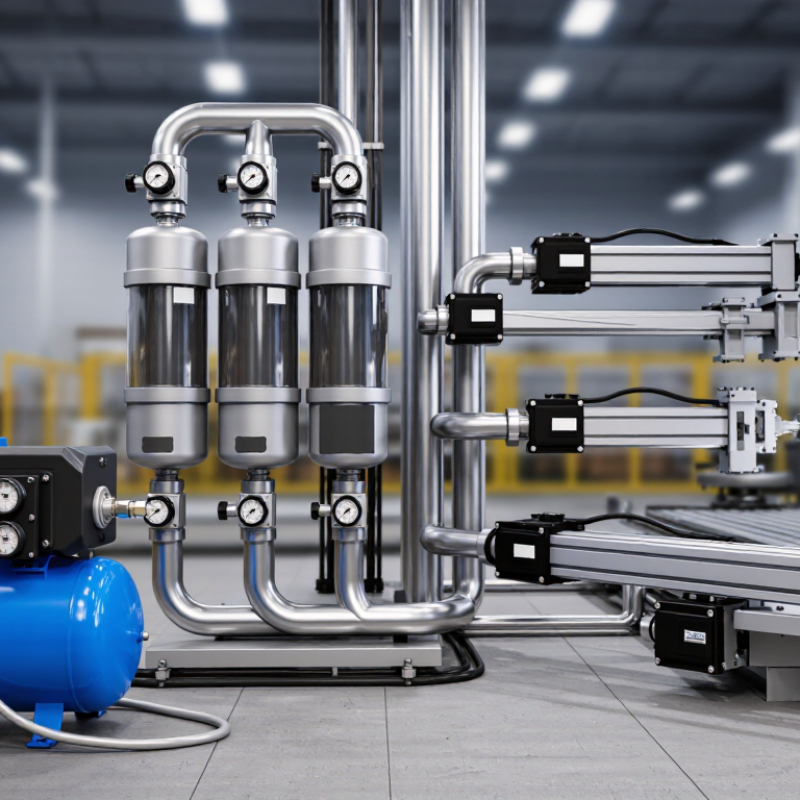
What Is Pneumatic Equipment and How Does It Work? This question reaches far beyond compressors and air cylinders. Pneumatic Equipment uses compressed air to transmit energy, control motion, and operate tools in factories, workshops, packaging lines, and vehicle systems. A compressor raises air pressure, while valves direct that air through pipes toward actuators. The actuator then converts pressure into movement, such as a piston extending, a gripper closing, or a rotary tool spinning.

The process looks simple. It is not always simple. Air preparation matters. Filters remove particles and moisture separators limit contamination, while regulators control working pressure. Lubricators may support selected components, although many modern systems require oil-free operation. ISO 8573-1 classifies compressed-air purity by particles, water, and oil, giving engineers a practical framework for specifying air quality. A poorly chosen filter can restrict flow and quietly increase energy demand.

Energy use deserves attention. The U.S. Department of Energy’s Improving Compressed Air System Performance guide reports that compressed-air systems can consume about 10% of industrial electricity. The guide also notes that leaks may waste 20–30% of compressor output in poorly maintained facilities. CAGI’s compressed-air best-practice guidance emphasizes leak detection, pressure management, and correct equipment sizing. These details affect reliability more than impressive catalog claims.

A hissing fitting may seem minor. It is not. In real facilities, small leaks accumulate around couplings, hoses, and valve seals. Pneumatic systems are clean, responsive, and durable, but they are not automatically efficient. Their performance depends on design, installation, maintenance, and honest measurement.
What Is Pneumatic Equipment and How Does It Work?

What Is Pneumatic Equipment?

What Is Pneumatic Equipment?

Pneumatic equipment uses compressed air to produce and control movement. Air drives the motion. A compressor draws in atmospheric air, compresses it, and stores it in a receiver. Tubes carry air to valves, cylinders, motors, or grippers. A valve meters airflow, while a cylinder converts air pressure into straight-line force. Rotary actuators create turning motion.

A practical system may include a filter, regulator, and lubricator when the equipment requires lubrication. The filter removes particles and condensed water. The regulator keeps pressure stable, protecting seals and improving repeatability. In a workshop, a cylinder might push a carton into position. A sensor can then signal the valve to retract it. This action may happen quickly and repeatedly, with little electrical heat at the moving point.

Pneumatics offer clean operation, simple maintenance, and controllable force in many industrial settings. However, compressed air is not free. Compressors consume substantial energy, and leaks can remain unnoticed behind fittings. Leaks waste energy. Moisture may cause corrosion or frozen valves. Incorrect pressure can damage components or create unexpected movement. Installations are imperfect. Technicians should isolate the air supply, release stored pressure, and inspect hoses before service. Pneumatic equipment also has limits. It may be less precise than electric systems when loads vary or positioning must be exact. Good selection requires checking force, speed, air quality, duty cycle, and the working environment.

What Are the Main Components of a Pneumatic System?

A pneumatic system turns compressed air into controlled mechanical motion. Its main components work as a chain. The compressor draws in atmospheric air and raises its pressure. A receiver tank stores that air and reduces pressure fluctuations. The U.S. Department of Energy reports that compressed-air systems can consume about 10% of industrial electricity. That figure makes efficient component selection important.

Air treatment follows compression. A dryer removes moisture, while filters capture oil and solid particles. Poor treatment can corrode valves and damage seals. ISO 8573-1 classifies compressed-air purity by particles, water, and oil. Regulators then set a stable working pressure. Directional control valves route air through tubing to pneumatic cylinders or rotary actuators. These actuators create linear or rotary movement. Sensors and controllers adjust timing, position, and pressure. Safety valves release excess pressure when necessary. Small details matter.

Field technicians often find leaks near fittings, not inside major components. The DOE also notes that leaks may waste 20–30% of compressor output in poorly maintained systems. A pressure gauge may look normal while a hidden leak keeps the compressor running. That is easy to miss. Tubing size, exhaust silencers, and valve response also affect machine speed. In practice, a technically correct design can still perform poorly after installation. Regular leak testing and filter replacement remain essential, although maintenance schedules are often too optimistic.

How Does Compressed Air Power Pneumatic Equipment?

Pneumatic equipment uses compressed air to create controlled motion. A compressor draws in atmospheric air and raises its pressure. The air then travels through filters, dryers, valves, tubing, and a receiver tank. When a directional valve opens, stored air enters an actuator. In a cylinder, air pressure pushes a piston forward or backward. Rotary actuators use the same principle to produce turning force. The process feels simple, but small pressure losses can change machine performance.

The U.S. Department of Energy’s Improving Compressed Air System Performance sourcebook reports that compressed-air systems may waste 20% to 30% of compressor output through leaks. It also identifies compressed air as a major industrial electricity user. This matters because most input energy becomes heat, not useful motion. A gauge may show acceptable pressure while restricted filters reduce actual airflow. That mistake is common. In practice, technicians should check pressure, flow, temperature, and leak noise together. A pneumatic tool may operate, yet still consume excessive air.

Tips: Inspect hoses and fittings during quiet production periods. Use ultrasonic detection when available. Keep filters clean and drains functional. Set pressure only as high as the application requires. Excess pressure increases energy use and can shorten component life. A receiver tank helps manage sudden demand, but it cannot repair poor pipe sizing. The DOE sourcebook also recommends fixing leaks systematically and measuring results afterward. Data should guide adjustments. Guesswork often survives longer than it should.

What Types of Pneumatic Equipment Are Commonly Used?

What Is Pneumatic Equipment and How Does It Work?

Common pneumatic equipment includes compressors, air receivers, dryers, filters, regulators, valves, cylinders, and rotary actuators. Together, these components convert compressed air into controlled linear or rotary motion. A compressor supplies pressure, while an air receiver reduces pulsation and supports short demand peaks. Dryers and filters remove moisture and particles. Regulators then set stable working pressure near each machine.

The U.S. Department of Energy reports that compressed air can represent 10–15% of industrial electricity use. Its guidance also identifies leaks as a major source of avoidable waste. This makes leak detectors and automatic shutoff valves practical equipment, not optional extras. Pneumatic cylinders suit gripping, pushing, lifting, and clamping tasks. Rotary actuators handle turning operations. Vacuum generators support pick-and-place work, especially with smooth, flat parts. Flow controls adjust speed, while solenoid or pilot-operated valves manage movement sequences.

The International Energy Agency links industrial efficiency improvements with better energy management and system control. That principle applies here. A larger compressor is not always the better choice. Oversizing can increase cycling, heat, and maintenance costs. A tidy specification sheet can still mislead. Real demand changes during every shift. In practice, technicians should check pressure at the actuator, inspect condensate drains, and measure leakage during idle periods. The figures vary by facility, but measurement remains more reliable than assumption.

What Are the Benefits and Limitations of Pneumatic Systems?

Pneumatic equipment uses compressed air to create movement or control processes. Typical systems include compressors, air preparation units, valves, tubing, and pneumatic cylinders. When a valve directs pressurized air into a cylinder, the piston moves and produces linear force. This action can open a gate, clamp a workpiece, or push products along a conveyor.

Pneumatic systems offer several practical benefits. Their components are generally lightweight, compact, and quick to operate. They also work well in dusty or wet areas because air-powered actuators do not require electric motors at every movement point. In production settings, a cylinder can repeat the same short stroke thousands of times. Maintenance staff can often identify problems through pressure readings, unusual hissing, or slower motion. The equipment is not always quiet.

However, compressed air has important limitations. Compressors consume considerable energy, even when the system is idle. Small leaks around fittings may remain unnoticed while steadily increasing operating costs. Moisture in the air line can damage valves, freeze in cold conditions, or reduce cylinder performance. Pneumatic actuators also provide less precise positioning than many electric alternatives. Their force and speed can change when supply pressure fluctuates or loads vary. In field inspections, technicians sometimes find pressure set too high to compensate for poor maintenance. That approach wastes energy and may shorten component life. Careful filtration, leak testing, pressure control, and regular inspection are necessary, although real facilities do not always follow the schedule perfectly.

WhatsApp Online Chat !