
Choosing a reliable Led Mining Headlamp manufacturer in China requires more than comparing brightness claims.
Mining teams need stable illumination, impact resistance, battery endurance, and dependable after-sales support. A lamp may advertise 10,000 lumens, yet poor thermal control can reduce output underground. Real performance matters more.
The global LED lighting market reached approximately USD 78.2 billion in 2022, according to Grand View Research. Its report also identifies energy efficiency and longer service life as major market drivers. Meanwhile, the International Energy Agency reports that LED products generally consume far less electricity than traditional lighting technologies. These findings support LED adoption, but they do not prove every mining headlamp is suitable for harsh work.
Safety remains the central test. The U.S. Mine Safety and Health Administration emphasizes adequate illumination, equipment inspection, and worker visibility in mining environments. As lighting engineer John Bullough has stated, “Lighting is a key factor in human performance and safety.” His research at the Lighting Research Center focuses on visibility, glare, and human responses to light.
China’s leading manufacturers increasingly combine high-output LEDs, lithium battery systems, sealed housings, and certification testing. However, supplier rankings are not absolute. Factory scale, export history, test documentation, and field feedback can produce different results.
This guide examines China’s top Led Mining Headlamp manufacturers through those practical criteria. It considers beam distance, runtime, charging design, ingress protection, helmet compatibility, and customization capability. Some published specifications remain difficult to verify independently. That weakness deserves attention. A brighter lamp is not automatically a safer lamp.
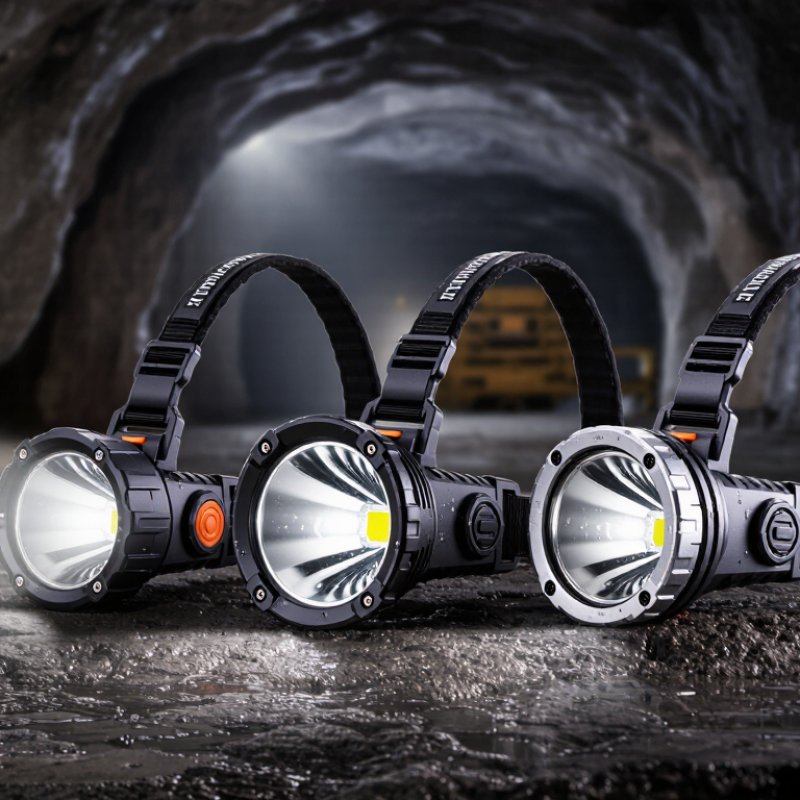
What defines a top LED mining headlamp manufacturer in China? Field reliability comes before impressive catalog numbers. A qualified producer should control LED selection, thermal design, battery protection, and final assembly under one traceable quality system. The U.S. Department of Energy’s 2023 Solid-State Lighting R&D Opportunities report notes that advanced LED packages can exceed 200 lumens per watt in laboratory conditions. However, a mining headlamp rarely achieves that figure after lenses, heat, wiring, and battery limits. Buyers should request measured output, runtime curves, charging-cycle results, and beam readings from independent laboratories.
Safety evidence matters more than brightness. The International Energy Agency reports that lighting uses about 15% of global electricity, making efficient LEDs valuable, but underground work also demands stable performance in dust, moisture, vibration, and darkness. A serious Chinese manufacturer should provide IEC 60529 ingress-protection testing, battery transport documentation, and applicable mining or intrinsic-safety certifications. It should also explain whether tests cover the complete lamp, not only the LED module. Small detail, major difference.
Production experience appears in uncomfortable places: sealed charging ports, glove-friendly switches, spare battery availability, and clear failure records. A supplier that shares corrective-action reports is often more credible than one showing perfect marketing figures. I would still question claimed runtime, because laboratory tests may use reduced brightness or new batteries. Factory audits, sample aging tests, and field feedback from operators reveal more than polished specifications.
China’s leading LED mining headlamp manufacturers combine rugged design with large-scale production experience. Their products commonly use high-efficiency LED chips, impact-resistant housings, and rechargeable lithium batteries. These features support long shifts in dark, dusty, and humid underground environments. Some manufacturers also offer adjustable beam angles, magnetic charging contacts, and low-battery warnings.
Safety remains a major product strength. Reliable factories test water resistance, drop performance, charging stability, and battery temperature control. They can often provide reports for relevant market certifications and adapt designs to different workplace requirements. A practical buyer should examine the certification scope, not just the certificate image. That detail is easy to miss.
Customization is another advantage. Chinese suppliers may adjust strap materials, lamp brightness, battery capacity, logos, and packaging for bulk orders. Their engineering teams can also improve heat dissipation after field feedback. However, advertised runtime may change with brightness, temperature, and battery age. No supplier is perfect. A sample test during a realistic shift is wiser than trusting a catalogue alone.
Manufacturers with dependable quality systems usually record incoming material checks, assembly inspections, and final charging tests. They should explain battery specifications clearly and provide replacement parts or repair guidance. Buyers can compare beam distance, charging time, IP rating, weight, and warranty terms before making a decision. Small details matter underground.
China’s top LED mining headlamp manufacturers compete through engineering, not only price. Their strongest products combine high-efficiency LEDs, sealed housings, and stable battery control. According to the U.S. Department of Energy’s 2023 Solid-State Lighting R&D Plan, 200 lumens per watt remains an important performance benchmark for advanced LED systems. Chinese factories increasingly test optical output, heat transfer, and battery endurance under simulated underground conditions.
Thermal management is critical. A compact aluminum heat path can reduce LED temperature near the forehead. This helps preserve brightness during long shifts. Many manufacturers now use lithium-ion cells with battery-management systems that monitor voltage, current, and temperature.
The International Energy Agency reported in Global Critical Minerals Outlook 2024 that battery supply chains remain exposed to mineral and processing risks. That reality encourages better cell screening and traceability.
Ingress protection is another key technology. IP-rated sealing, reinforced cable joints, and impact-resistant lenses help prevent dust and moisture failures. Models designed for hazardous areas may also require independent explosion-protection assessment under applicable standards.
Certification alone is not enough. Field testing matters more. A lamp can pass a laboratory test yet feel unbalanced, slippery, or difficult to recharge underground. That weakness is often overlooked. Evaluation should include glove operation, charging-cycle records, beam stability, and actual worker feedback. No design is perfect.
China’s top LED mining headlamp manufacturers are often compared by safety evidence, not brightness claims. Reliable factories provide test records for battery protection, water resistance, impact durability, and charging stability. These documents should match the actual production model.
In practical inspections, housing strength matters. A headlamp may survive a workshop drop, yet fail after repeated vibration underground. Look for sealed battery compartments, secure helmet mounts, heat control, and switches that work with gloves. LED performance should remain stable after several hours, not only during a showroom demonstration. Experienced buyers also inspect wiring, solder joints, charging ports, and replacement battery quality. Some manufacturers communicate clearly, but their technical English can still be incomplete. Ask direct questions and request sample testing.
Tips: Compare identical specifications. Check runtime at working brightness, not the lowest setting. Request independent test reports when possible. Confirm whether each lamp has batch traceability and clear maintenance instructions. Keep sample records, photographs, and temperature observations. A small detail, but useful.
Quality is not always consistent across every production batch. That is worth admitting. A factory may pass one inspection and still need better process control later. Regular audits, realistic field trials, and worker feedback reveal weaknesses that catalogues often hide. Safety becomes more credible when manufacturers accept questions, explain limitations, and improve designs after documented failures.
| Comparison Dimension | Verifiable Benchmark | Higher-Quality Manufacturer Profile | Minimum Evidence to Request | Why It Matters in Mining |
|---|---|---|---|---|
| Mining safety approval | Valid Chinese Mining Products Safety Approval, commonly known as MA, for the exact headlamp model. | Provides a certificate that matches the model number, battery configuration, manufacturer, and intended mining application. | A current certificate, scope of approval, model number, expiry date, and certificate-verification record. | It confirms that the product has passed the applicable Chinese mining-safety approval process rather than being a general-purpose flashlight. |
| Explosion protection | Applicable Ex or intrinsic-safety certification for hazardous locations, supported by relevant IEC 60079 or national equivalent requirements. | Uses controlled energy levels, protected circuits, approved batteries, and documented safeguards against sparks and excessive surface temperature. | Certification number, protection concept, gas or dust group, temperature class, and approved battery details. | Mining environments may contain flammable gases or combustible dust, so ordinary LED lamps are not automatically suitable. |
| Ingress protection | IEC 60529 IP rating; IP65 protects against dust ingress and water jets, while IP67 and IP68 provide higher water-ingress protection under specified test conditions. | Uses sealed housings, protected charging interfaces, reliable gaskets, and production testing rather than relying only on an advertised rating. | IP test report identifying the complete lamp assembly, test conditions, sample configuration, and testing laboratory. | Water, mud, coal dust, and cleaning processes can cause corrosion, short circuits, or reduced illumination. |
| Battery safety | Battery protection should address overcharge, over-discharge, short circuit, over-current, and abnormal temperature conditions. | Uses traceable cells, a documented battery-management system, controlled charging, and a battery pack approved together with the lamp. | Cell specifications, BMS test results, battery-pack certification, charging instructions, and UN 38.3 transport documentation where applicable. | A damaged or incorrectly charged lithium battery can create fire, thermal, or explosion risks. |
| LED and optical performance | Performance should be supported by measured lumens, beam pattern, color consistency, runtime, and thermal-stability data. | Publishes measured results from a defined test method and maintains stable illumination as battery voltage decreases. | Photometric report, integrating-sphere data, runtime curve, LED-bin information, and sample test results. | Accurate forward illumination and predictable runtime improve visibility, navigation, and worker safety underground. |
| Runtime accuracy | Runtime should be stated for each operating mode and measured from a full charge to the defined end-of-discharge condition. | Separates regulated runtime from emergency or low-output runtime and provides results at realistic ambient temperatures. | Runtime graphs, test temperature, operating mode, battery capacity, and end-point voltage. | Overstated runtime can leave workers without adequate light during a shift or evacuation. |
| Mechanical durability | The design should withstand impact, vibration, repeated charging, cable bending, and routine industrial handling. | Uses impact-resistant housing materials, strain relief, secure helmet mounting, and documented reliability testing. | Drop, vibration, cable-flex, switch-cycle, and mounting-system test records for the production model. | Daily impacts and movement can loosen mounts, damage wiring, or reduce lamp reliability. |
| Thermal management | The lamp should control LED and battery temperature within the limits defined by its safety certification and component specifications. | Uses current regulation, heat dissipation, thermal protection, and output control that remain stable in enclosed or warm conditions. | Thermal test curves, protection thresholds, component temperature limits, and certification test conditions. | Excess heat can shorten battery life, reduce LED output, and create a safety hazard in hazardous atmospheres. |
| Manufacturing quality system | A documented quality-management system, commonly aligned with ISO 9001, should control incoming materials, assembly, testing, and traceability. | Maintains batch records, calibrated test equipment, corrective-action procedures, and serial-number traceability. | Quality certificate, factory audit records, inspection plan, calibration records, and sample inspection reports. | Consistent production is essential because certification of one sample does not guarantee every unverified configuration. |
| Charging and fleet management | Charging equipment must match the battery chemistry, voltage, current, connector, and hazardous-area requirements of the approved system. | Provides controlled charging racks, charge-status indicators, fault detection, and clear separation of approved and non-approved accessories. | Charger specifications, compatibility list, charging-cycle test results, and operating procedures. | Incorrect chargers are a frequent source of battery damage and may invalidate the safety approval. |
| Documentation and after-sales support | Technical files should include manuals, certificates, spare-parts information, charging instructions, and safety limitations. | Offers consistent documentation in English and Chinese, model-specific service procedures, replacement batteries, and warranty traceability. | Controlled product manual, parts list, warranty terms, repair records, and certificate update procedure. | Clear documentation reduces misuse and helps operators maintain compliance throughout the product life cycle. |
| Overall supplier ranking approach | Safety certification and model conformity should be weighted before brightness, price, or appearance. | The strongest supplier is the one that can prove conformity, repeatable quality, reliable runtime, and service capability for the exact delivered configuration. | Require samples, independent test reports, factory audit results, certificate verification, and a written change-control commitment. | A high-lumen product without verified mining suitability may present greater operational risk than a lower-output certified lamp. |
Note: Certification validity, protection markings, and test results should always be checked against the exact model, battery pack, charger, and intended mining environment.
Selecting a Chinese LED mining headlamp manufacturer requires more than comparing brightness. The U.S. Department of Energy reports that LED products can use at least 75% less energy and last up to 25 times longer than incandescent lighting. For underground work, however, battery stability, heat control, impact resistance, and beam consistency matter more than laboratory lumens.
Ask each supplier for photometric test data, battery-cycle results, ingress protection evidence, and production traceability. Confirm whether the lamp meets the certification rules required in your target mine. Depending on the site, this may include explosion-protection, electrical-safety, or mining-specific approvals. Request samples from regular production, not only polished demonstration units. Check charging time, switch response with gloves, cable flexibility, and lamp performance after several hours underground. A bright sample can hide weak quality control. No checklist is perfect; field testing remains necessary.
Tips: Review at least three factories. Audit their assembly line and battery testing process. Ask for recent inspection records and failure-rate data. Clarify warranty response times, spare-part availability, and minimum order quantities. A reliable manufacturer should explain technical limits honestly, even when the answer is inconvenient. The best choice is not always the cheapest offer; it is the supplier that delivers stable light, documented compliance, and repeatable quality.