

• Longtop Mining, Professional Mining Equipment Supplier
  • Longtop Mining, Professional Mining Equipment Supplier
  • Longtop Mining, Professional Mining Equipment Supplier

China Top Vertical Slurry Pump Manufacturers and Suppliers?

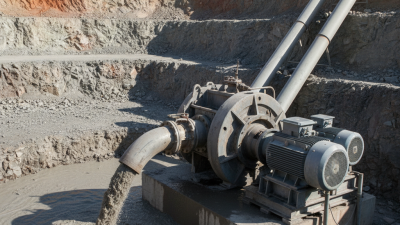
Choosing reliable China Top Vertical Slurry Pump Manufacturers and Suppliers requires more than comparing online prices. A Vertical Slurry Pump must handle abrasive solids, changing flow rates, and demanding site conditions. Mine drainage, mineral processing, dredging, and industrial waste systems each create different challenges. One pump rarely suits every application.

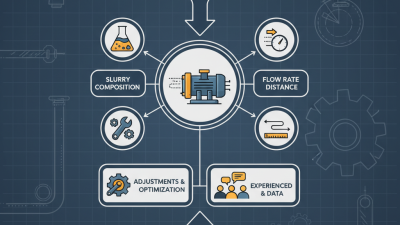
Experienced buyers inspect wet-end materials, shaft design, impeller structure, sealing methods, and motor compatibility. They also request clear performance curves, solids-handling data, and wear-life expectations. These details reveal whether a supplier understands real operating conditions or simply repeats catalog language. Factory audits, sample testing, quality records, and responsive engineering support add valuable evidence. Ask for references from comparable plants.

Field experience often exposes overlooked problems. A pump may perform well during a short trial but lose efficiency when slurry density increases. Rubber liners can protect against certain particles, while high-chrome alloys may suit harsher abrasion. The right choice depends on chemistry, particle size, temperature, and installation depth.

Not every published claim is complete. That matters. Some suppliers provide excellent fabrication but limited after-sales support. Others offer strong service yet need closer inspection of documentation. This guide examines leading Chinese manufacturers and suppliers through practical criteria, including production capability, customization, testing, delivery reliability, and maintenance support. The goal is not to promote one company blindly. It is to help engineers and procurement teams make a defensible decision, with fewer surprises after commissioning. Performance should be verified, not assumed.
China Top Vertical Slurry Pump Manufacturers and Suppliers?

Vertical Slurry Pumps: Design, Applications, and Key Performance Data

Vertical Slurry Pumps: Design, Applications, and Key Performance Data

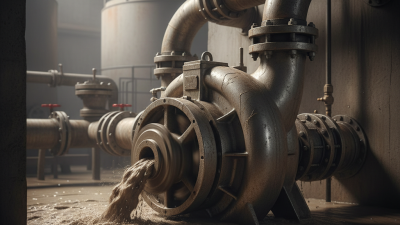
When comparing China’s vertical slurry pump manufacturers and suppliers, study design details before price. A vertical slurry pump uses a submerged casing, cantilever shaft, and drive assembly above the sump. This arrangement removes the need for submerged shaft seals and bearings. It suits abrasive slurry, tailings, mineral processing, sand recovery, and wastewater pits. Common configurations handle approximately 20–1,000 m³/h, with heads from 10–60 metres. Actual performance depends on solids concentration, particle size, and impeller design. Open or semi-open impellers reduce blockage risks. However, they may sacrifice efficiency with very fine slurry.

Tips: Request a complete performance curve, material specification, and factory test report. Check shaft length, allowable solids size, motor power, and wear-part replacement time. In field inspections, I also measure sump depth and check for vortex formation. A small vortex can introduce air and cause unstable flow. Suppliers should explain how their data was tested, not merely provide attractive numbers. Installation conditions are often underestimated. That mistake can damage the pump faster than abrasive particles. No selection is perfect. Regularly review pressure, vibration, power consumption, and wear rates after commissioning. These records reveal whether the selected pump truly matches the site.

China’s Leading Manufacturers by Flow Rate, Head, and Solids Capacity

China’s leading vertical slurry pump manufacturers compete on flow rate, head, and solids capacity. These three figures reveal more than price. They show whether a pump fits a sump, mill circuit, or tailings line.

The U.S. Geological Survey reported approximately 2.5 billion metric tons of global iron ore production in 2023. That scale explains continued demand for abrasive-duty pumping equipment. Chinese suppliers commonly engineer vertical units across roughly 5–5,000 m³/h, with heads near 5–60 meters. Some heavy-duty configurations handle solids around 80–100 millimeters, depending on impeller design and material selection. These ranges are indicative, not universal.

Independent industry reviews, including Grand View Research’s slurry pump market analysis, identify mining as a major demand sector. Buyers should request certified performance curves, not catalogue headlines. A reliable supplier should provide flow-head efficiency data, wetted-part metallurgy, shaft limits, and laboratory or site-test records. Ask how capacity changes at 60% solids. That detail often exposes weak comparisons.

Vertical pump selection also depends on sump depth, particle shape, submergence, and maintenance access. A high flow rate may still produce poor service if the available head is insufficient. Published figures are not always comparable. I have seen capacity claims omit slurry density, which makes the comparison misleading. Check the test medium, speed, and solids concentration before ranking Chinese manufacturers.

Pump Materials, Wear Resistance, and Slurry Concentration Standards

China’s vertical slurry pump suppliers should match materials to the actual ore duty, not only advertise high hardness. The USGS Mineral Commodity Summaries 2025 estimates 2024 global iron ore production at about 2.5 billion metric tons. That scale keeps abrasive transport demanding. High-chrome white iron, often containing 25–28% chromium, suits coarse and sharp particles. Rubber liners can perform better with fine particles and corrosive, low-impact slurries. ASTM G65 abrasion testing helps compare materials, but it does not fully reproduce wet slurry conditions. Wet testing remains essential.

Slurry concentration has no single global standard. Suppliers should state solids concentration by weight, particle size, slurry density, temperature, and pH. Mineral-processing practice often covers roughly 30–60% solids by weight, but this is a design range, not a universal limit. At 45% solids, a pump may need a different impeller and motor than one handling 25%. ISO 9906 supports hydraulic performance verification, yet it does not replace wear-life testing. Ask for test curves using representative solids. Small details matter. I have seen catalogue ratings fail when oversized particles entered the sump. A stronger specification should include D50, maximum particle size, settling behavior, and expected annual operating hours. Suppliers should also disclose uncertainty in wear-life estimates, because field conditions rarely remain perfectly stable.

How to Compare Suppliers: ISO Certification, Testing, and Service Coverage

When comparing China’s vertical slurry pump suppliers, do not treat an ISO certificate as automatic proof of quality. Check whether ISO 9001 covers pump design, machining, assembly, and after-sales service. Confirm the certificate’s validity, certification body, and registered business scope. A supplier should also provide controlled drawings, material records, and inspection procedures.

Testing reveals more than polished sales language. Request performance curves based on your slurry density, particle size, flow rate, and lifting height. Review hydrostatic, vibration, shaft alignment, and wear-part test results. Ask whether tests use calibrated instruments and whether customers can witness them remotely or onsite.

I once accepted a general test sheet without checking the operating conditions. That was a mistake. Test data only matters when it matches the real duty.

Service coverage can decide whether a pump remains productive after delivery. Compare installation guidance, commissioning support, spare-part availability, and technician response times. Ask how quickly wear liners, shafts, and impellers can be supplied.

Clarify warranty exclusions and communication channels before signing. Reliable suppliers should explain maintenance intervals with practical details, not vague promises. Local support helps. Still, even strong suppliers may lack field experience with unusual slurry chemistry, so request references from similar applications.

Selection Guide Based on Particle Size, Density, pH, and Operating Conditions

Choosing China’s top vertical slurry pump manufacturers and suppliers requires more than comparing prices. Start with the slurry profile. Measure particle size, hardness, solids concentration, and liquid density under real plant conditions. A pump handling fine clay may fail quickly with coarse, sharp particles.

pH also matters. Acidic or alkaline liquids can attack metal components, seals, and fasteners. Request material recommendations based on measured chemistry, not assumptions. Vertical designs suit sumps with limited floor space, but immersion depth, temperature, and available head still control performance. Check capacity at the actual duty point. Oversized pumps often waste energy and operate poorly.

Tips: Send suppliers a complete duty sheet. Include flow rate, total head, particle size, density, pH, temperature, sump depth, and operating hours. Ask for wear-life evidence and inspection records. Confirm whether replacement parts are locally available. A short video of the sump can reveal turbulence or blockage risks. Do not trust a generic curve alone. I have seen selection errors caused by laboratory samples that did not represent seasonal slurry changes. Recheck the data after commissioning. Small details matter.

China Top Vertical Slurry Pump Manufacturers and Suppliers? - Selection Guide Based on Particle Size, Density, pH, and Operating Conditions

Slurry Condition Typical Design Range Recommended Pump Configuration Preferred Wetted Materials Key Selection Considerations Suitable Applications Supplier Qualification Data to Request
Fine particles Particle size generally below 75 μm; low to moderate solids loading Open or semi-open impeller with moderate speed; vertical cantilever construction is suitable for sump service Rubber-lined components for abrasive but chemically compatible slurries; corrosion-resistant alloys for acidic service Check hydraulic efficiency, settling velocity, air entrainment, and minimum submergence Tailings water, flotation concentrate, mineral-processing drains, and fine ash slurry Performance curve, recommended operating range, NPSH data where applicable, and minimum liquid level
Medium particles Approximately 75–500 μm; moderate solids concentration Heavy-duty open impeller with enlarged passages and replaceable wear components High-chrome white iron for strong abrasion resistance; rubber may be used when particle size and temperature are suitable Prioritize wear life, passage size, impeller clearance, and shaft rigidity Sand handling, ore dressing, coal preparation, and construction slurry Maximum recommended particle size, wear-rate information, spare-part dimensions, and material hardness data
Coarse particles Approximately 0.5–5 mm; high risk of blockage and accelerated wear Low-speed, large-passage impeller with robust cantilever shaft and heavy-duty bearings High-chrome alloy or other abrasion-resistant metal; rubber is generally less suitable for sharp, coarse solids Confirm non-clogging passage, solids handling capability, impact resistance, and allowable tip speed Gravel-bearing slurry, dredging support systems, aggregate washing, and coarse tailings Passage diameter, maximum solids size, impeller balancing grade, shaft deflection calculation, and wear-part replacement procedure
High-density slurry Specific gravity commonly about 1.3–1.8; higher values require application-specific review High-torque drive with reduced speed or larger pump size to maintain hydraulic capacity Material selected according to both abrasion and corrosion; high-chrome alloy is common for abrasive mineral slurries Motor power must be corrected for slurry density; verify torque, shaft load, and structural strength Dense-medium separation, iron ore concentrate, mineral thickener underflow, and high-solids process streams Slurry specific gravity, solids concentration by weight, absorbed power, motor service factor, and starting torque
Low-pH slurry Typically pH 2–5; exact resistance depends on acid type, temperature, and chloride content Vertical pump with corrosion-resistant wetted parts and a drive isolated from the liquid Corrosion-resistant alloys, engineered plastics, or suitable elastomers selected from chemical-resistance data Do not select material from pH alone; identify acid composition, temperature, oxidizers, and halides Acid leaching, metal refining, chemical process drainage, and acidic mine water Material compatibility chart, corrosion allowance, chemical composition review, temperature limit, and coating details
Neutral or mildly alkaline slurry Approximately pH 6–10; often favorable for metallic or rubber-lined designs Standard vertical cantilever slurry pump sized for the required flow, head, and solids content High-chrome alloy for abrasion; natural or synthetic rubber where temperature and particle characteristics permit Evaluate abrasion first, then confirm elastomer temperature and chemical compatibility Coal slurry, mineral flotation, sand washing, wastewater grit, and general process sumps Material grade, elastomer type, maximum temperature, wear-life reference, and complete pump curve
Hot slurry Above approximately 60°C; temperature limit depends on material, elastomer, and bearing arrangement Vertical pump with temperature-rated bearings, shaft seals or seal arrangements, and thermal expansion allowance Metallic wetted parts are commonly preferred; elastomer selection must be verified for continuous temperature Check bearing temperature, shaft expansion, motor cooling, vapor pressure, and sump ventilation Hot mineral process water, boiler ash, metallurgical process slurry, and heated chemical streams Continuous and maximum temperature, thermal expansion calculation, bearing rating, seal arrangement, and cooling requirements
High-air or frothy slurry Slurry contains entrained air or persistent foam; flow may fluctuate significantly Inducer or special impeller arrangement where available; oversized suction area and controlled operating speed Selected primarily for abrasion and corrosion; material choice does not eliminate air-handling limitations Confirm air content, foam behavior, sump geometry, vortex prevention, and minimum immersion depth Flotation circuits, aerated process tanks, froth handling, and chemical treatment systems Air-volume estimate, anti-vortex recommendations, minimum submergence, tested operating envelope, and control method
Intermittent sump duty Variable liquid level, frequent starts and stops, or occasional dry periods Vertical cantilever design without a submerged mechanical seal is often advantageous; confirm dry-running limitations Wear-resistant metal or compatible elastomer based on slurry chemistry and solids Verify start frequency, minimum immersion, bearing lubrication, motor protection, and allowable empty-sump time Emergency sumps, drainage pits, process overflow pits, and batch-processing systems Permitted starts per hour, dry-run tolerance, level-control logic, bearing design, and motor protection class
Continuous heavy-duty duty 24-hour operation with stable flow and high abrasive loading Heavy-duty vertical slurry pump with replaceable wear parts, robust shaft, and correctly sized drive High-chrome alloy or application-specific abrasion-resistant metal; rubber only when validated by service conditions Use the pump near its best-efficiency region and provide adequate allowance for wear and future capacity loss Mining concentrators, tailings stations, coal preparation plants, and mineral processing facilities Guaranteed duty point, efficiency, wear-life estimate, vibration limits, inspection intervals, and spare-parts availability
Supplier comparison criteria Applicable to all particle sizes, densities, pH levels, and operating modes Compare complete pump systems rather than pump body price alone Require traceable material specifications and documented compatibility Select by life-cycle cost: energy, wear parts, downtime, maintenance access, and delivery reliability New installations, replacement projects, and plant-wide standardization Request certified performance testing, dimensional drawings, material certificates, references for similar duty, warranty terms, lead time, and after-sales support
Selection guidance is based on commonly used engineering practices for vertical slurry pumps. Actual limits vary with pump geometry, impeller design, solids shape, concentration, temperature, chemical composition, installation depth, and motor configuration. Final sizing should be confirmed against the supplier’s certified performance curve and a complete slurry-duty datasheet.
WhatsApp Online Chat !