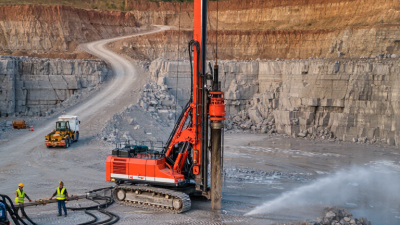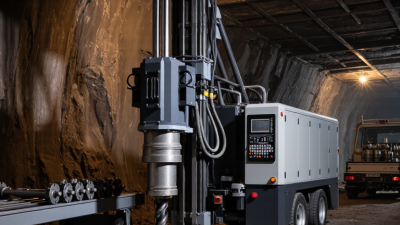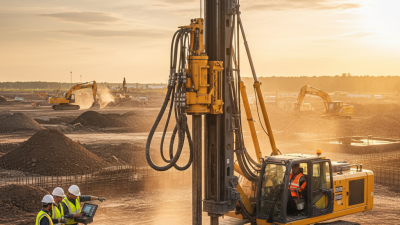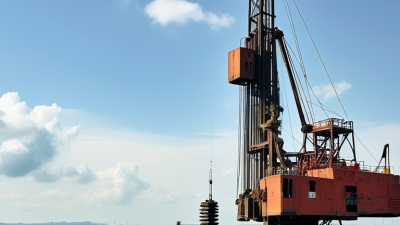
Choosing a 30m Depth Rock Drill requires more than comparing engine power or advertised drilling speed. The correct machine must match the rock formation, hole diameter, working angle, and site conditions. A drill that performs well in dry granite may struggle in fractured limestone or wet ground. Small differences matter.
Evert Hoek, a leading rock-engineering authority, stated, “The objective of rock engineering is to create safe and economical structures in rock.” His principle also applies to drilling equipment selection. A reliable 30m Depth Rock Drill should deliver stable feed pressure, sufficient torque, effective flushing, and predictable penetration. These features become important when operators work beside steep benches, narrow access roads, or uneven platforms. Field experience often reveals problems that brochures overlook. Hose routing, mast rigidity, spare-part access, and operator visibility can decide whether a machine remains productive after several demanding shifts.
Look closely at the details.
This guide presents five practical tips for evaluating a 30m Depth Rock Drill. It considers geology, drilling capacity, power requirements, mobility, maintenance, and total operating cost. Some recommendations may seem obvious. They are still easy to miss when deadlines influence purchasing decisions. I have also included a few limitations worth questioning, because no drill suits every formation or project. Test data, service records, and operator feedback should support the final decision. A confident purchase should survive both the specification sheet and the dust, vibration, and changing ground of a real worksite.
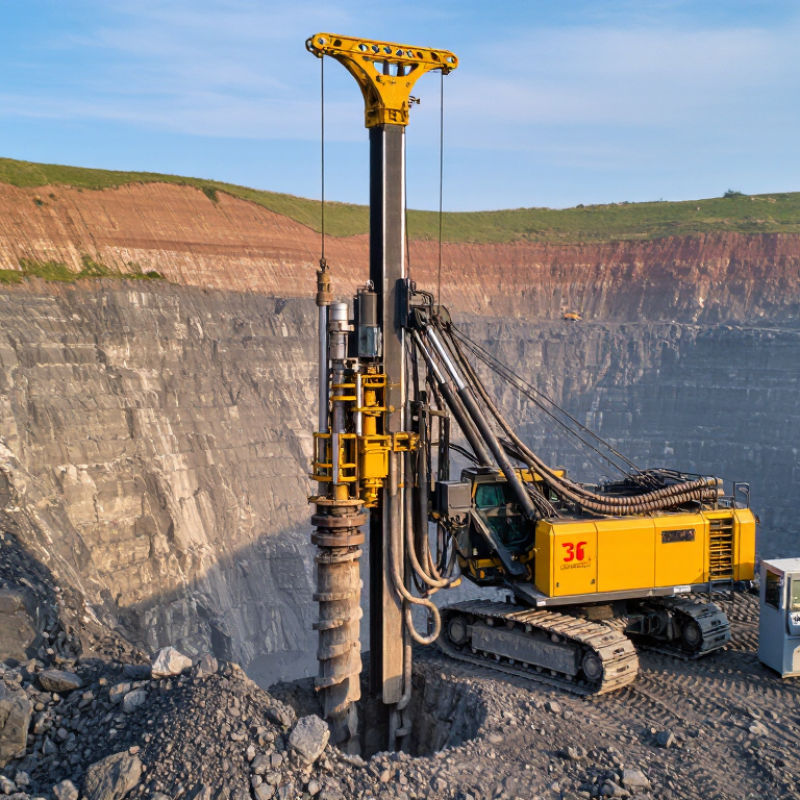
5 Tips for Choosing a 30m Depth Rock Drill
Define the Drilling Requirements and Target Rock Conditions
Start with the hole, not the machine. Specify depth, diameter, angle, deviation limits, daily output, and site access. A 30m target does not always require a 30m-rated drill. Rod length, casing needs, and fractured ground can reduce practical reach. The 2024 USGS Mineral Commodity Summaries reports about 1.5 billion metric tons of crushed stone produced in the United States during 2023. That scale reflects highly variable rock conditions. Limestone, granite, shale, and weathered rock demand different drilling responses.
Measure the rock before selecting power and tooling. Uniaxial compressive strength indicates how much energy the bit may need. Abrasivity affects button wear and replacement costs. Fractures can cause hole collapse, water loss, or sudden deviation. The International Society for Rock Mechanics recommends combining intact-rock tests with rock-mass observations. Field logs should record joint spacing, groundwater, weathering, and core recovery. Small details matter. A wet, broken zone can change the drilling method completely.
Match the drill to the real working envelope. Check feed force, rotation torque, compressor capacity, dust control, and rod handling. Review penetration rates from comparable formations, not brochure claims. A 2023 engineering review by the Federal Highway Administration stresses that discontinuities often control excavation behavior more than intact strength. That point is easy to miss. I would also allow extra capacity for casing and reaming, though excessive power can increase vibration and costs. Trial drilling remains worthwhile when the geological record is incomplete. Mistakes happen. The useful response is to measure them early.
5 Tips for Choosing a 30m Depth Rock Drill
Tip 1: Match the drill type to the rock. Top-hammer drills suit fractured rock and mobile work. Down-the-hole drills usually deliver straighter holes in hard, stable formations. Rotary-percussive systems can be flexible, but their performance depends heavily on bit pressure and flushing. At 30m, rod deflection becomes noticeable. A specification sheet never tells the whole story.
Tip 2: Compare power sources honestly. Hydraulic drills provide strong control and high torque. Pneumatic systems remain practical where compressed air already exists. Electric units can reduce local exhaust emissions and noise, especially underground. The International Energy Agency reported that renewables generated about 30% of global electricity in 2023. That figure does not guarantee clean drilling, but it strengthens the case for electric power where the grid is reliable. Avoid choosing electric equipment without checking cable protection and voltage stability.
Tip 3: Examine the operating method. A crawler-mounted drill offers better feed force and alignment than handheld equipment. Wet drilling can control dust, while air flushing may simplify work in dry conditions. The U.S. Mine Safety and Health Administration sets an 8-hour diesel particulate matter limit of 160 μg/m³ total carbon. This makes ventilation and engine selection critical in enclosed areas. Small details matter.
Tip 4: Check maintenance access. Ask how quickly workers can replace rods, seals, filters, and drill bits. A 30m hole is useless if downtime consumes the schedule. Tip 5: Request trial data from similar rock. Penetration rate, fuel or power use, hole deviation, and bit life reveal more than brochure claims. Field conditions vary, and my own preference could still be wrong on unfamiliar geology.
A 30-meter rating is only useful when the drill can reach that depth in real ground conditions. Evaluate the rock type, fracture pattern, and groundwater before trusting the specification. Hard, abrasive rock may reduce penetration speed and increase bit wear. Check whether the machine maintains stable torque and feed pressure near maximum depth. Depth alone is not performance.
Request verified drilling records from comparable sites. Look for penetration rate, rod changes, fuel use, and downtime. A clean test report matters more than a generous brochure claim.
Match the drilling method to the formation. Rotary, down-the-hole, and percussive systems behave differently in granite, shale, and loose layers. Ask for sample results, not vague promises.
Examine the mast, rod length, and alignment system. Small alignment errors become serious at 30 meters.
Check compressor output, flushing efficiency, and dust control. Poor flushing can trap cuttings and slow the hole.
Test control stability under load. Smooth movement protects the hole and reduces operator fatigue.
Some evaluations miss maintenance access, which is a mistake. Inspect filters, hoses, and wear parts before purchase. A drill that reaches 30 meters slowly, unevenly, or with frequent stoppages may cost more than a slightly stronger machine.
5 Tips for Choosing a 30m Depth Rock Drill
At 30 meters, bit compatibility is not a minor purchasing detail. Match the drill’s shank, thread, diameter, flushing method, and operating pressure. A mismatched bit can increase vibration, reduce penetration, and damage the rod string. Check the manufacturer’s torque and rotation ranges against your actual rock conditions. Field records matter more than brochure claims. Keep spare bits available, but avoid buying a complete set before testing one in representative ground.
Safety features deserve equal attention. The International Labour Organization reports that mining employs about 1% of the global workforce but accounts for roughly 8% of fatal workplace accidents. That figure demands practical controls. Look for guarded rotating parts, emergency stops, stable feed systems, dust suppression, and clear pressure gauges. Confirm that lockout points are reachable without leaning over the mast. Small design choices matter. I have seen operators ignore awkward controls during urgent work; that shortcut can become the real hazard.
Maintenance access often decides whether a drill stays productive. Inspect grease points, hydraulic filters, hose connections, and rod-changing areas during a site visit. The U.S. Department of Energy’s Operations and Maintenance Best Practices Guide links planned maintenance with improved reliability and lower lifecycle costs, although drilling conditions vary. Do not assume easy access from a diagram. Open every service panel. Check whether two technicians can safely replace a filter, drain moisture, and inspect the compressor. A useful test is simple: time the inspection. If routine access feels slow now, it will feel worse underground.
| Tip | Selection Dimension | What to Check | Practical Data or Requirement | How to Verify Before Purchase |
|---|---|---|---|---|
| 1 | Confirm the Rated Drilling Depth | Check whether the stated depth is the maximum depth under specific ground conditions or the recommended working depth. Review the planned hole diameter, rock hardness, rod length, and flushing method. | For a 30 m target, the drill should have a published rated capacity of at least 30 m for the intended formation and hole diameter. The available rod length must cover the full depth while allowing for connection overlap, setup clearance, and removal of cuttings. | Request a performance chart showing depth, hole diameter, penetration rate, thrust, rotation speed, and applicable rock conditions. Do not rely on a maximum depth listed without test conditions. |
| 2 | Check Bit and Rod Compatibility | Match the bit shank, thread form, rod diameter, connection type, flushing passage, impact frequency, and required rotation speed. Confirm that the bit is suitable for the rock type and drilling method. | The bit connection must match the drill and rods exactly; adapters should not be used unless approved for the system. The selected bit diameter should correspond with the stated hole diameter, and the flushing system must deliver sufficient air or water flow to remove cuttings. | Compare the drill, rod, adapter, and bit drawings or technical data sheets. Verify shank dimensions, thread specifications, operating pressure, flushing requirements, and the maximum permitted bit diameter in writing. |
| 3 | Evaluate Safety Features | Inspect emergency-stop controls, operator guards, hose protection, anti-whip restraints, overload protection, stable mounting, dust suppression, noise control, and protection against unintended restart. | Controls should be clearly marked and reachable from the operating position. Pressurized hoses require suitable rated fittings and restraints. Dry drilling in rock can create respirable crystalline silica dust, so wet drilling or an effective dust-collection system is essential where applicable. | Review the risk assessment, safety manual, guarding drawings, noise and vibration data, hose ratings, and applicable local requirements. Confirm that emergency-stop and restart functions can be tested during commissioning. |
| 4 | Match Power and Ground Conditions | Compare the available power source with the drill's required hydraulic, pneumatic, electric, or engine input. Consider rock hardness, fractured ground, water ingress, inclination, access restrictions, and required thrust. | The power unit should meet the drill's specified operating pressure, flow, voltage, current, or air demand without continuous operation at its limit. A stable feed system and adequate thrust are needed to prevent bit binding, excessive vibration, and premature wear. | Use the manufacturer's operating envelope and calculate the total hose, cable, and elevation losses. Confirm that the carrier, mast, tripod, or frame is rated for the intended angle and load, especially for inclined or overhead drilling. |
| 5 | Assess Maintenance Access and Wear Parts | Check access to lubrication points, filters, seals, hoses, couplings, rod clamps, feed components, and impact or rotation assemblies. Identify routine inspection tasks and expected wear items. | Daily checks commonly include leaks, loose fasteners, hose damage, lubrication condition, guards, controls, and bit or rod wear. Service intervals must follow the equipment manual because they vary with duty cycle, dust, water, pressure, and operating environment. | Ask for a maintenance schedule, parts list, lubrication chart, service clearances, lockout procedure, and estimated replacement times for bits, rods, seals, filters, and hoses. Confirm that inspection points can be reached without removing major assemblies. |
Choosing a 30m depth rock drill requires more than comparing purchase prices. The real cost includes drill rods, bits, fuel, transport, maintenance, and lost production. Ask for expected drilling rates in similar rock and soil conditions. A machine may reach 30m on paper, yet struggle with fractured rock or hard formations. Test figures matter. So does fuel use.
Supplier support can protect your schedule. Check spare parts availability, technician response times, training, and warranty conditions. Request a clear maintenance plan before signing an order. It should identify service intervals, common wear parts, and likely replacement costs. Ask for operating references from sites with comparable depths and ground conditions. General promises are not enough.
Long-term reliability depends on practical details. Inspect the feed rails, rotary head, hydraulic lines, dust controls, and frame protection. Look for accessible service points and clear inspection procedures. Small details matter. A drill that is difficult to maintain may create expensive downtime later. One common mistake is focusing too heavily on drilling speed. I have seen fast equipment lose its advantage when seals, hoses, or drill tools fail repeatedly. Consider a lifecycle cost over several years, not just the first invoice. Leave room for uncertainty, because geology rarely follows the brochure.